
A credit score is a number that predicts how likely you are to repay borrowed money on time. Lenders use it when deciding whether to approve you for a credit card, auto loan, mortgage, or other loan product.
Your score also affects interest rates and credit limits. A higher score can help you qualify for lower rates, which saves you real money over the life of a loan. A lower score may mean higher rates or a flat denial.
Credit Score vs Credit Report
A credit report is a detailed record of your credit activity: accounts, payment history, balances, collections, and other credit-related information.
A credit score is calculated from the information in a credit report using a scoring model.
The report is the raw data. The score is the summary number. If something is wrong in your report (a payment marked late by mistake, an account you don’t recognize), it drags your score down until you fix it. That’s why checking your credit report regularly matters, not just glancing at the score.
You Do Not Have One Score
You can have many credit scores because:
- Different lenders use different scoring models
- Different products may use different scores (a mortgage lender may use a different model than a credit card issuer)
- Scores can draw on data from different credit reporting companies (Equifax, Experian, and TransUnion each keep separate files)
- Your information changes over time as balances, payments, and accounts are updated
Don’t panic if two scores don’t match exactly. Focus on the habits that improve things across all scoring models.
What Affects A Credit Score?
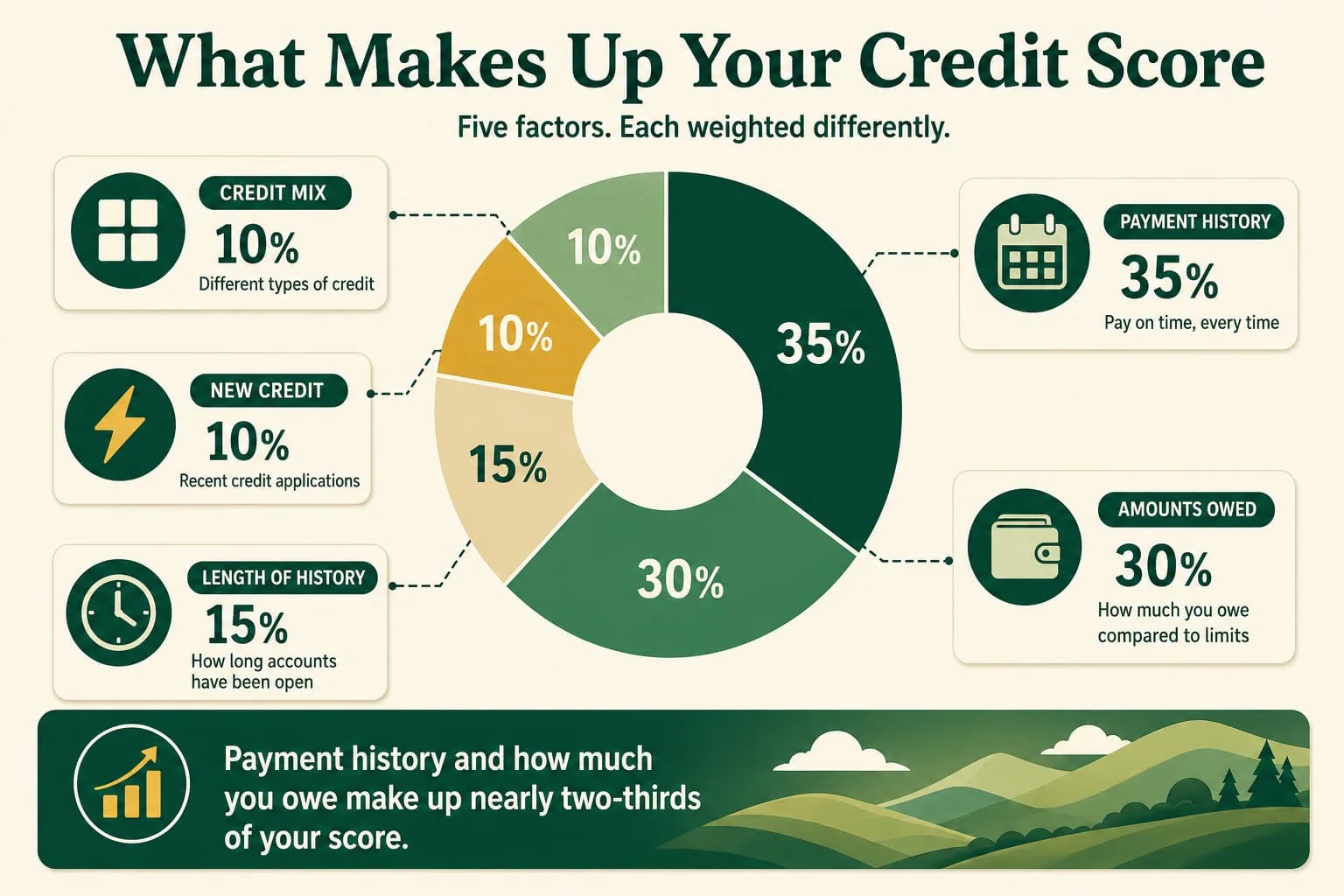
Common factors include:
- Payment history: Whether you pay on time is typically the single most influential factor. Even one late payment can cause a noticeable drop.
- Amounts owed: How much of your available credit you’re using, often called credit utilization. Using a large percentage of your limit can hurt your score even if you pay in full each month.
- Length of credit history: Older accounts and a longer average account age generally help. This is one reason closing old cards can sometimes backfire.
- New credit applications: Applying for several credit accounts in a short window can lower your score temporarily, because each application may trigger a hard inquiry.
- Credit mix: Having a mix of account types, credit cards, installment loans, a mortgage, can help, though this is a smaller factor.
- Negative marks: Collections, charge-offs, bankruptcies, and foreclosures can significantly lower a score and may stay on reports for several years.
Payment history and credit card balances are especially important for most people.
Why Credit Scores Matter
A stronger credit profile can make it easier to:
- Qualify for loans and credit cards
- Get lower interest rates on auto loans, mortgages, and personal loans
- Rent housing, many landlords check credit
- Get certain utility or phone accounts without a large deposit
- Access better credit card terms and higher limits
Credit is not the same as wealth, but it affects what borrowing costs you over a lifetime. The difference between a good and a mediocre interest rate on a mortgage can add up to thousands of dollars on the same loan amount.
Check The Report, Not Just The Score
If your score changes, look at your credit reports. Errors, missed payments, high balances, or new accounts can all move the number.
You can check free credit reports weekly through AnnualCreditReport.com, one from each of the three major bureaus (Equifax, Experian, TransUnion). If you find an error, dispute it with the credit reporting company and the company that reported the information. The bureau must investigate and respond, typically within 30 days.
If you’re starting from scratch with no credit history at all, see How To Build Credit From Scratch for where to begin.
Frequently Asked Questions
Q: What is a good credit score?
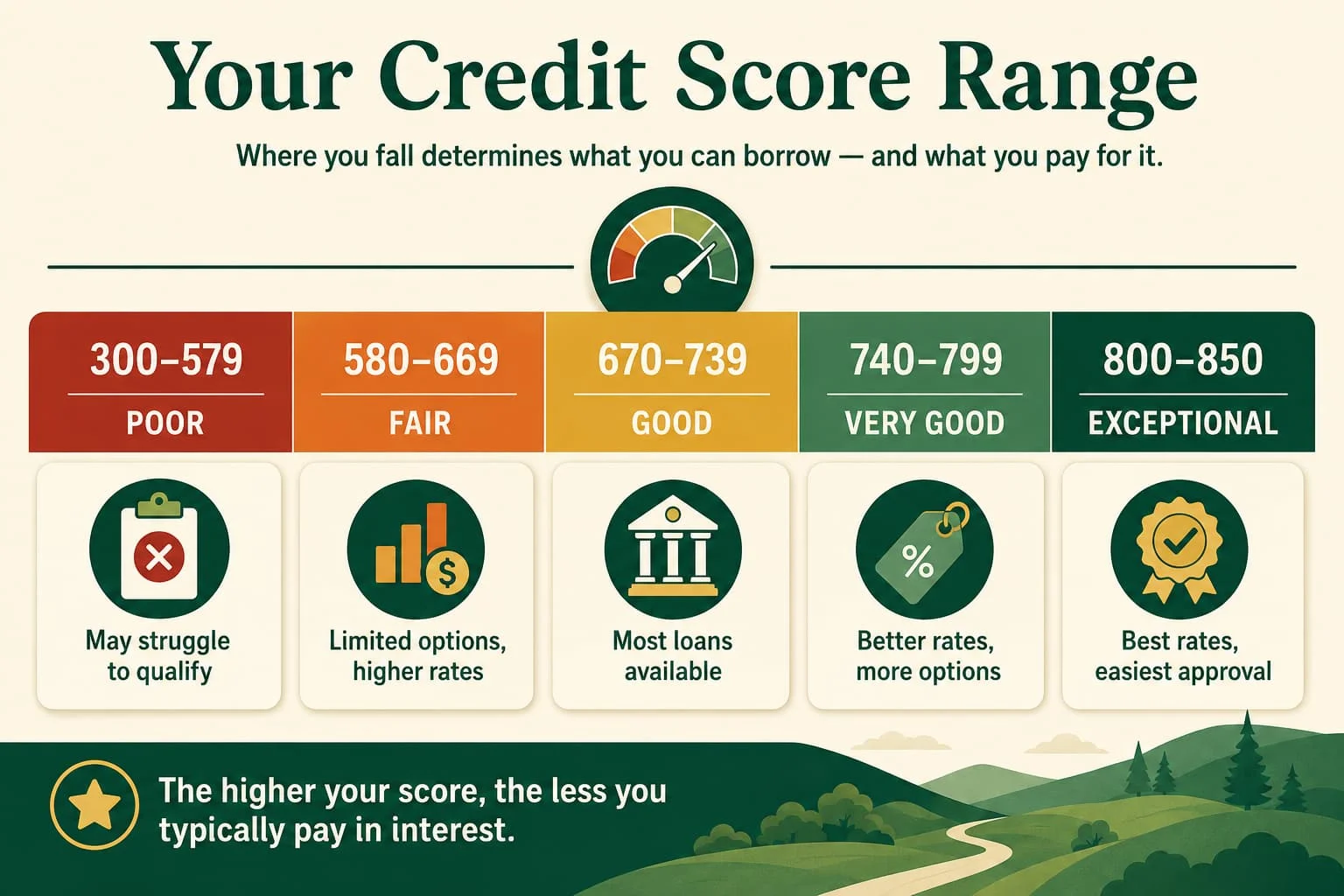
Scoring ranges vary by model, but scores generally fall into buckets: poor, fair, good, very good, and exceptional. Above 700 is considered good by most lenders, and above 740–760 you typically qualify for the best rates. Below 580–600 is considered poor and makes it harder to get approved. Focus on the habits rather than chasing a specific target number.
Q: Does checking my own credit score lower it?
No. Checking your own score is a soft inquiry and doesn’t affect your score at all. Hard inquiries, which happen when a lender checks your credit because you applied for something, can have a small, temporary effect. You can check your own score as often as you like without worrying about it.
Q: What is the difference between a credit score and a credit report?
Your credit report is the full record of your credit history: every account, payment, balance, inquiry, and negative mark. Your credit score is a single number calculated from that data. The report is the source; the score is the summary. Errors on the report affect the score, so it’s worth reviewing both.
Q: How long does it take to build a good credit score?
Building a solid credit history takes time, at least six months to establish a score at all, and several years to reach the higher ranges. The fastest path is consistent on-time payments and low balances. There are no shortcuts, but steady habits add up.
Learn More
- Consumer Financial Protection Bureau: What is a credit score?
- Consumer Financial Protection Bureau: What is a credit report?
- Federal Trade Commission: Credit scores