
A brokerage account is an investment account that lets you buy and sell investments: stocks, bonds, mutual funds, ETFs, and other securities.
Unlike a 401k or IRA, a regular brokerage account doesn’t have special retirement tax treatment. It’s often called a taxable brokerage account for that reason.
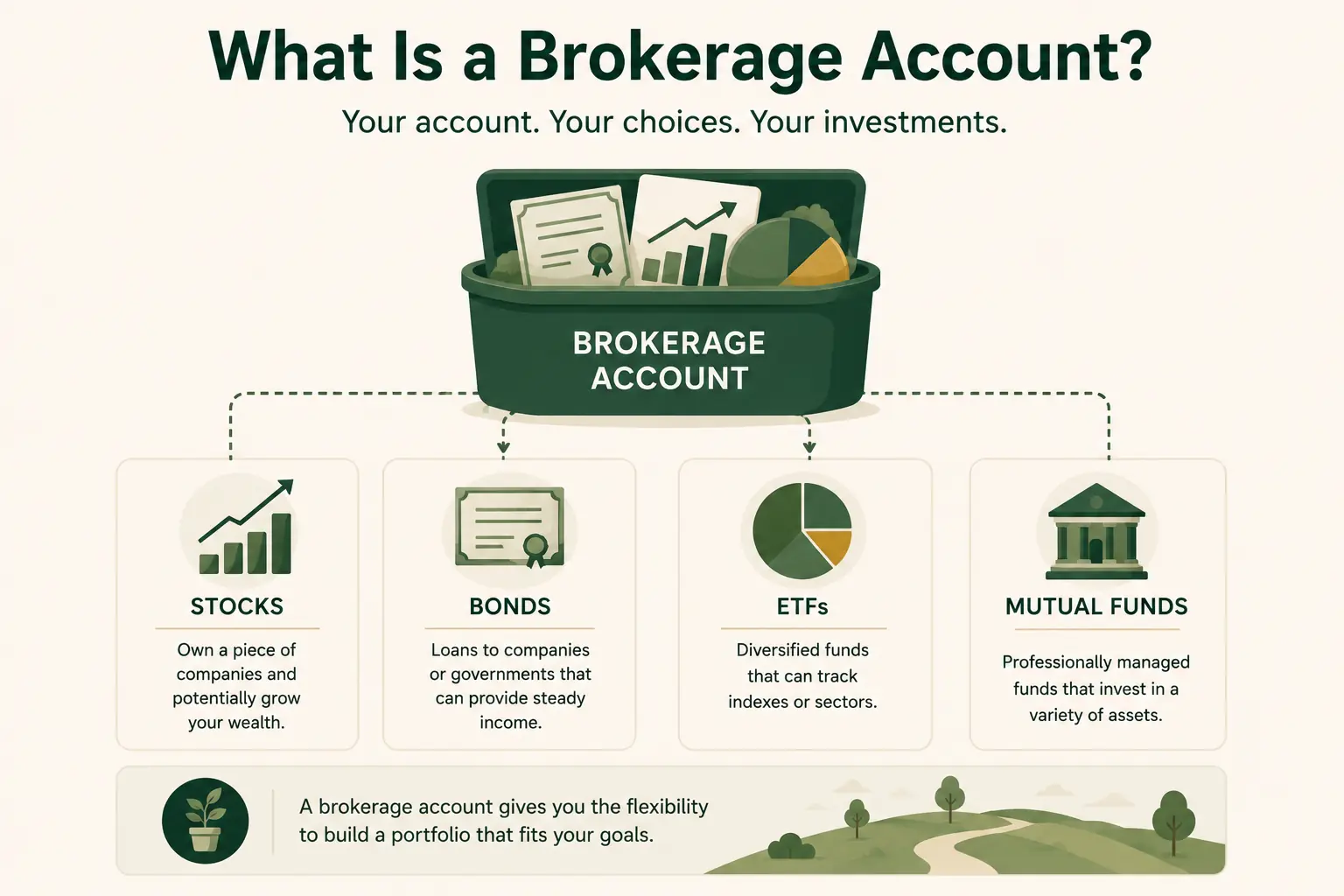
What It Can Hold
Depending on the brokerage, the account may let you buy:
- Stocks
- Bonds
- ETFs
- Mutual funds
- Money market funds
- Options, if approved
- Other investments
You choose what to buy. The account itself isn’t an investment. Think of it as a container, the brokerage account holds your investments, but what’s inside and how it performs depends on the choices you make.
How To Open One
Opening a brokerage account is straightforward. You’ll need to:
- Choose a brokerage (major options include Fidelity, Vanguard, and Schwab, compare fee structures and available investments)
- Provide your Social Security number and basic personal information
- Link a bank account to fund the account
- Choose your first investments; you don’t have to invest right away after opening
Most accounts can be opened online in under 30 minutes. Many have no minimum balance. Some brokerages also offer fractional shares, meaning you can invest a specific dollar amount rather than buying a full share.
Brokerage vs Retirement Account
| Taxable Brokerage | 401k / IRA | |
|---|---|---|
| Contribution limits | None | Annual limits set by IRS |
| Tax treatment | Pay taxes on dividends, interest, and gains each year | Tax-deferred or tax-free growth depending on account type |
| Withdrawal rules | No penalties, withdraw anytime | Early withdrawal penalties before age 59½ in most cases |
| Access to money | Flexible | More restricted |
| Best for | Goals beyond retirement, or after maxing retirement accounts | Retirement savings |
Retirement accounts like 401ks and IRAs have tax advantages but also come with contribution limits and withdrawal restrictions. If you’re still building up a 401k or IRA, those typically come first for retirement saving. For more on the tax differences, see What Is A Roth IRA? or What Is A 401k?.
A taxable brokerage account is more flexible. You can add or withdraw money without retirement account penalties, but taxes may apply when investments pay income or are sold for a gain.
When A Brokerage Account May Help
A brokerage account can be useful for:
- Long-term investing after retirement accounts are funded
- Goals that are too far away for cash savings but aren’t strictly retirement
- Investing money beyond workplace plan contribution limits
- Building taxable investments for financial flexibility
- Saving for a goal in 5–10 years (like a house down payment, a sabbatical, or early retirement)
It’s usually not the right place for emergency savings or money you’ll need soon. For shorter-term cash needs, a high-yield savings account or money market account is generally more appropriate. See Where Should I Keep My Money? for guidance on matching accounts to goals.
Taxes Matter
In a taxable brokerage account, you may owe taxes on:
- Dividends: generally taxed as ordinary income or at qualified dividend rates, depending on how long you held the investment
- Interest: taxed as ordinary income in the year you receive it
- Capital gains when you sell: hold for more than a year and you pay the lower long-term capital gains rate; sell sooner and it’s taxed as ordinary income
- Fund distributions: mutual funds and ETFs can pass capital gains on to shareholders even if you didn’t sell anything
Tax details depend on the investment, holding period, and your situation. Holding investments for over a year before selling, and choosing low-turnover funds, can meaningfully improve your after-tax returns.
Start Simple
Before opening a brokerage account, make sure you have an emergency fund, no high-interest debt, and a handle on your employer retirement match and short-term goals.
Investing is easier when the basics are stable. If you’re carrying high-interest credit card debt, paying that off first is often the better move. The interest rate on that debt likely beats any realistic expected investment return.
Frequently Asked Questions
Q: Is a brokerage account the same as a retirement account?
No. A brokerage account is a general-purpose taxable investment account. Retirement accounts like 401ks and IRAs have specific tax advantages but also come with contribution limits and withdrawal rules. Most people use retirement accounts first, then add a brokerage account for goals beyond retirement or extra savings.
Q: Is my money safe in a brokerage account?
Brokerage accounts at SIPC-member firms are protected against the firm’s failure, not investment losses, up to $500,000, including $250,000 in cash. SIPC (Securities Investor Protection Corporation) steps in if the brokerage goes under, not if your investments lose value. Market losses are a separate risk.
Q: Do I pay taxes every year on a brokerage account?
You pay taxes on income (dividends and interest) each year. You only pay capital gains taxes when you actually sell an investment for a gain. If you buy and hold without selling, you can defer those gains. Keeping costs low through index funds can also reduce how often taxable distributions occur.
Q: When should I open a brokerage account vs max out my IRA first?
The general order most financial educators suggest: get your employer’s 401k match first, then fund a Roth or Traditional IRA if eligible, then go back to your 401k or open a brokerage account. A brokerage account makes more sense once you’ve maximized tax-advantaged space, or if you need the money before retirement age.
Learn More
- Investor.gov: Online Brokerage Accounts
- SEC.gov: Opening a Brokerage Account
- SEC: Saving and investing for your future